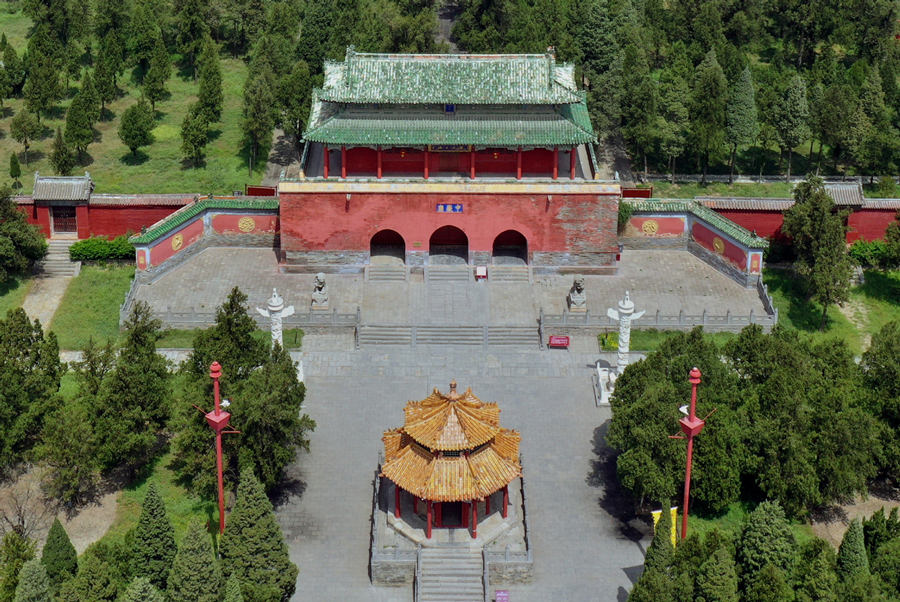
Zhongyue Temple in Dengfeng, Henan
Introduction
Zhongyue Temple, located in Dengfeng county of Henan province, is one of China's most significant Taoist temples and an exemplary site within the historical monuments of Dengfeng in "The Center of Heaven and Earth". This temple stands at the foot of Huanggai Peak on the southern side of Taishi Mountain, which is part of the renowned Songshan Mountain range.
Recognized as a key national temple of Taoism, Zhongyue Temple is a prominent cultural and religious landmark that attracts a multitude of visitors annually. The temple's significance stems not only from its architectural grandeur but also from its historical roots, which trace back to the 3rd century BC. Over the centuries, it has been a focal point of religious devotion, serving as a spiritual hub for Taoist practices.
History
Origins and Early Development
The origins of Zhongyue Temple date back to the 3rd century BC, marking its establishment as one of the oldest religious structures in China. It gained prominence during the reign of Empress Wu Zetian, who visited the temple for worship in 688, catalyzing its development and popularity. By 1013, the temple complex had expanded to encompass 900 rooms, reflecting its growth and significance during various dynasties. However, the temple experienced periods of decline thereafter, which led to successive restorations and repairs to preserve its historical and religious essence.
Significance in Chinese Culture
Zhongyue Temple holds a distinguished place within the cultural tapestry of China, representing the zenith of Taoist religious architecture. It is part of the broader historical monuments of Dengfeng, which embody the ancient concept of "The Center of Heaven and Earth", a notion deeply intertwined with imperial power and the sacredness of Songshan Mountain. The temple symbolizes the symbiotic relationship between nature and spirituality, serving as a site for imperial sacrifices and religious ceremonies for over 1,500 years. It is a testament to the enduring influence of Taoism and its integration into the cultural and spiritual life of China.
Architecture
Main Structures
Zhongyue Temple's architectural ensemble is one of the most complete and expansive ancient Taoist complexes in existence. It covers an area of 100,000 square meters and includes more than 400 rooms, showcasing a wide range of architectural styles and elements. Key structures within the temple complex include the Zhonghua Gate and the Tianzhong Pavilion, which, along with other buildings, extend over 6,500 meters from south to north. The Main Hall stands as the principal building, celebrated for its intricate craftsmanship and grandiose design, highlighting the temple's architectural sophistication.
Design Elements
The architectural design of Zhongyue Temple reflects traditional Taoist principles and Chinese architectural aesthetics. The temple complex is meticulously arranged, with its buildings harmoniously integrated into the natural landscape of Songshan Mountain. The use of symmetry, spatial hierarchy and detailed ornamentation are prominent features, illustrating the aesthetic values and religious symbolism of Taoism. The temple also houses numerous cultural relics, including inscriptions on tablets, which are of considerable importance for calligraphic research and offer a window into the cultural and artistic heritage of ancient China.
Cultural Significance
Zhongyue Temple attracts Taoist disciples and pilgrims who seek to engage in religious practices and ceremonies, reinforcing its status as a living spiritual site. The temple's religious significance is enhanced by its historical association with imperial patronage, which underscores its role in the religious and cultural life of ancient China.
The architectural design and layout of Zhongyue Temple have had a lasting impact on Chinese religious architecture. The temple's integration of natural elements with built structures exemplifies the harmonious relationship between architecture and the environment, a concept that has influenced subsequent generations of architects and builders. Its preservation and continued use demonstrate the enduring legacy of traditional Chinese architecture and its relevance in contemporary cultural and spiritual contexts.
Conservation and Restoration
Throughout its long history, Zhongyue Temple has undergone numerous restoration efforts to preserve its structural integrity and cultural significance. These conservation measures aim to protect the temple's architectural features and cultural relics from the effects of time and environmental factors. The temple's preservation is of national importance, given its status as a key cultural and religious site. Restoration projects are carefully planned and executed to maintain the authenticity and historical value of the temple complex.








